
How it works
DisplayPort is VESA's digital video-plus-audio link for computers. HDMI is the living-room plug. DisplayPort is the one on a GPU, a docking station, and a lot of high-refresh monitors. Same job (pixels and sound over a cable), different packet format, and a latch that clicks into the port.
A useful picture: HDMI is a TV remote. DisplayPort is a keyboard. Both talk to a screen. DisplayPort is the one built for PC timing, Multi-Stream Transport (one cable feeding more than one monitor through a hub), and Display Stream Compression on later versions.
The version on the box is the bandwidth ceiling, not a new plug shape:
- DisplayPort 1.2 is the older everyday cap: 4K60, MST, no DSC.
- DisplayPort 1.4 is HBR3 at 32.4 Gbps. With DSC it can do 8K60-class and 4K144-class modes that HDMI 2.0 cannot. This is the cable you buy for a 1440p 144Hz or 4K 144Hz PC monitor unless the listing is clearly DP 2.1.
- DisplayPort 2.0 / 2.1 raises the ceiling again (UHBR). That is a separate, faster spec. Do not pay a DP 2.1 tax for a 4K60 office panel.
USB-C can carry DisplayPort without a full-size DP jack. That pin remap is Alt Mode. A USB-C to DisplayPort cable is DP Alt Mode with a DP plug on the far end. USB4 and Thunderbolt tunnel DisplayPort inside their own fabric instead of the classic USB 3.x plus Alt Mode split. DisplayLink is the other extra-screen path: compressed frames over USB data, not native DP.
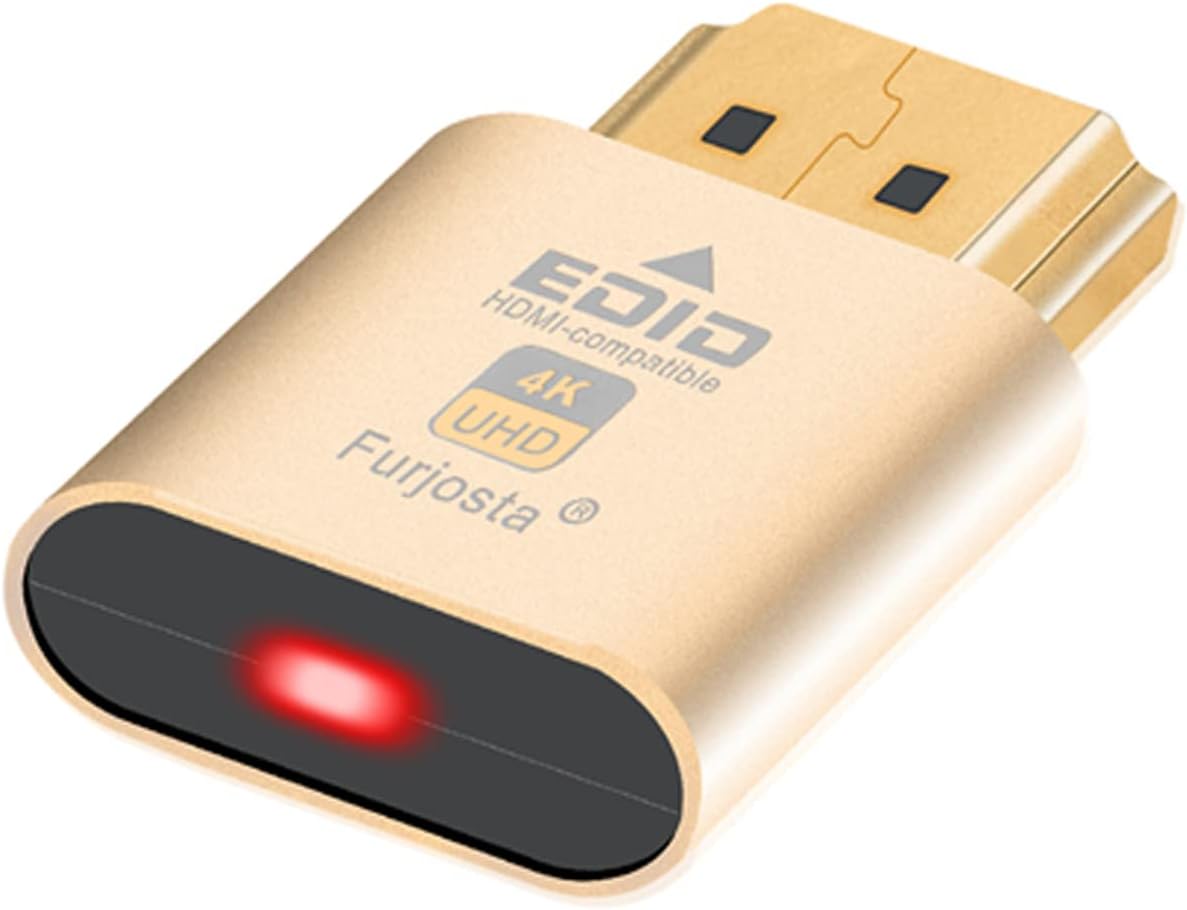
A dummy plug is not a cable. It is an EDID emulator that pretends a monitor is attached so a headless GPU keeps a full framebuffer. For when you still need one, and when Apple Silicon already skips it, see BetterDisplay and Dummy HDMI Plugs.
When it matters
It matters the moment you pick a GPU-to-monitor cable, a dock with a DP jack, or a dummy plug, because the slowest of GPU, cable, and panel wins. HDMI 2.1 is the console and TV 4K120 run. DisplayPort is the PC monitor run. A 4K144 panel on a DP 1.2 cable is a 4K60 panel. An HDMI cable in a DisplayPort jack does not exist; the plugs are different.
Docks that light two or three monitors often do it with DP MST or with Thunderbolt tunneling DP. A cheap USB-C hub with one HDMI jack is Alt Mode, not a DP MST tree. Charge-only USB-C has no SuperSpeed pairs to remap, so a USB-C to DP cable stays dark on a phone charger port.
Shop the version and the Hz figure, not the word "DisplayPort" alone. Depress the latch before you yank a cable out of a GPU.
Related products
Two catalog items that actually speak DisplayPort: a 4K60 dummy plug for a headless GPU, and a VESA-class DP 1.4 cable for a real monitor.
The EVanlak 4K60 DisplayPort dummy plug is an EDID emulator, not a cable. View on Amazon when a headless Windows or Linux box (or an Intel Mac with a DP jack) boots into a postage-stamp remote desktop until a monitor is attached. Skip it on Apple Silicon minis that already create a virtual display.
The Cable Matters DisplayPort 1.4 cable (6 ft) is HBR3 32.4 Gbps with a locking latch: 8K60 / 4K240 class on capable GPUs and panels, G-SYNC and FreeSync included. View on Amazon when the job is GPU to monitor, not a TV. HDMI 2.1 is the living-room sibling; this is the desk run.
Read next
For dummy plugs versus software virtual displays, read BetterDisplay and Dummy HDMI Plugs: Running a Mac Headless. For the TV and console cable generation, see What Is HDMI 2.1, and When Do You Need It?. For USB-C video without a DP jack, see Alt Mode. For docks that tunnel video inside a faster fabric, see USB4 and Thunderbolt. For software extra screens on ports with no Alt Mode, see DisplayLink.