
How it works
MLO (Multi-Link Operation) lets a Wi-Fi 7 client and AP keep more than one radio link active at the same time—often across 5 GHz and 6 GHz—instead of parking on a single band. In older Wi-Fi, a phone or laptop typically associates to one band at a time (2.4, 5, or 6 GHz). MLO treats those bands as parallel paths: frames can ride whichever link is healthier, and some modes aggregate capacity across links.
Both ends must speak Wi-Fi 7 (802.11be) with MLO enabled. A Wi-Fi 6 phone on a Wi-Fi 7 router still gets a single-link session. Dual-band Wi-Fi 7 gear can MLO across 2.4/5 GHz; tri-band kits with a real 6 GHz radio unlock the cleaner high-capacity path that marketing decks emphasize. Mesh backhaul can also use multi-link ideas between nodes, but client MLO is what you notice on a laptop or phone that supports it.
Think of it as seat-belt redundancy plus a second lane: if one band gets crowded or the 6 GHz signal fades at the far end of the house, traffic can shift without a full reconnect dance.
When it matters
It matters when you already have (or are buying) Wi-Fi 7 on both the router/AP and the client, and you care about steadier throughput under load—not when every device in the house is still Wi-Fi 5/6. MLO will not magically fix a weak ISP plan, a congested apartment building, or a house that needs better placement or wired backhaul. Prefer a tri-band Wi-Fi 7 router with 6 GHz when the goal is the full MLO story; dual-band Wi-Fi 7 still offers multi-link on 2.4/5 but skips the 6 GHz lane.
Skip the upgrade urgency if phones and laptops lack Wi-Fi 7, or if coverage dead zones are the real pain—fix those with placement, Ethernet, or mesh first. For the broader upgrade question, see What Is Wi-Fi 7, and Should You Upgrade Yet?. For covering awkward rooms without betting everything on wireless, see Powerline vs MoCA vs Mesh.
Related products
Wi-Fi 7 routers that advertise Multi-Link Operation—one accessible tri-band pick and one high-end tri-band with multi-gig ports.
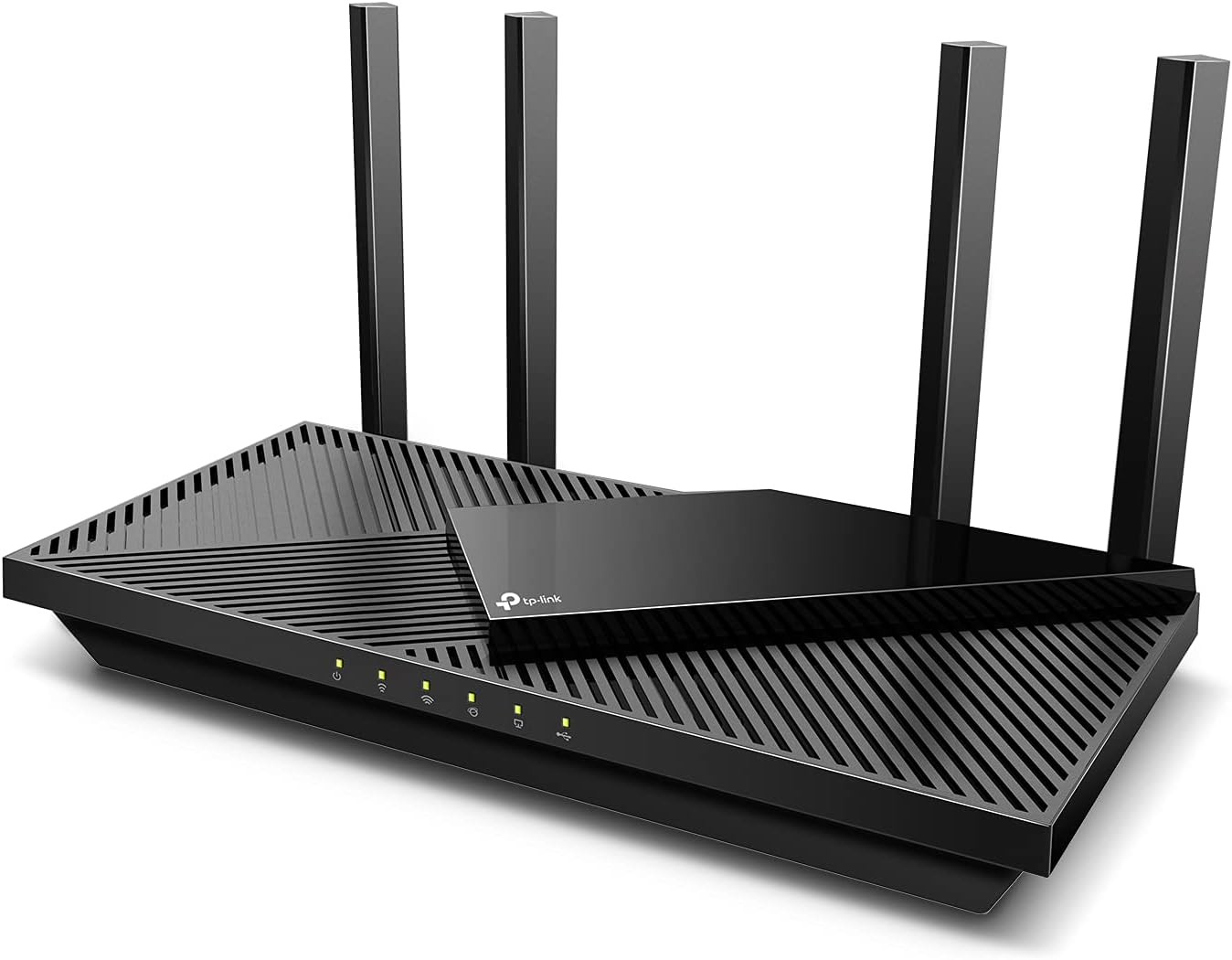
The TP-Link Archer BE550 (BE9300) is a tri-band Wi-Fi 7 router with a real 6 GHz radio and MLO support, plus multi-gig Ethernet for wired gear. View on Amazon when you want Wi-Fi 7 MLO without jumping straight to flagship pricing.
The ASUS RT-BE96U is a high-end tri-band Wi-Fi 7 router with MLO, dual 10 GbE ports, and AiMesh expansion. View on Amazon when the home already has multi-gig internet and Wi-Fi 7 clients that can use those parallel links.
Read next
For the full upgrade calculus, see What Is Wi-Fi 7, and Should You Upgrade Yet?. For whole-home coverage patterns, see What Is Mesh WiFi?. For wired runs that complement wireless, see Cat6.