
How it works
VRR (Variable Refresh Rate) lets a display change how often it redraws so it tracks the GPU’s frame rate instead of locking to a fixed Hz. On a fixed 60 Hz or 144 Hz panel, the GPU and screen often disagree: when frames arrive mid-refresh you get tearing; when the GPU stalls you get stutter. With VRR enabled, the monitor waits for the next finished frame (within a supported range, say 48–144 Hz) and refreshes then.
The names on the box are brands and standards stacked on the same idea:
- VESA Adaptive-Sync is the open DisplayPort feature that makes variable timing possible over DP.
- AMD FreeSync is AMD’s certification program built on Adaptive-Sync (and AMD’s older HDMI path). Most FreeSync monitors are the everyday PC VRR choice.
- NVIDIA G-SYNC Compatible means NVIDIA validated an Adaptive-Sync / FreeSync panel for GeForce cards without a proprietary G-SYNC module. Full hardware G-SYNC still exists on some premium panels.
- HDMI Forum VRR (part of HDMI 2.1) is the living-room / console path. PS5 and Xbox Series X|S use it over HDMI; many TVs and HDMI 2.1 monitors advertise it separately from FreeSync labels.
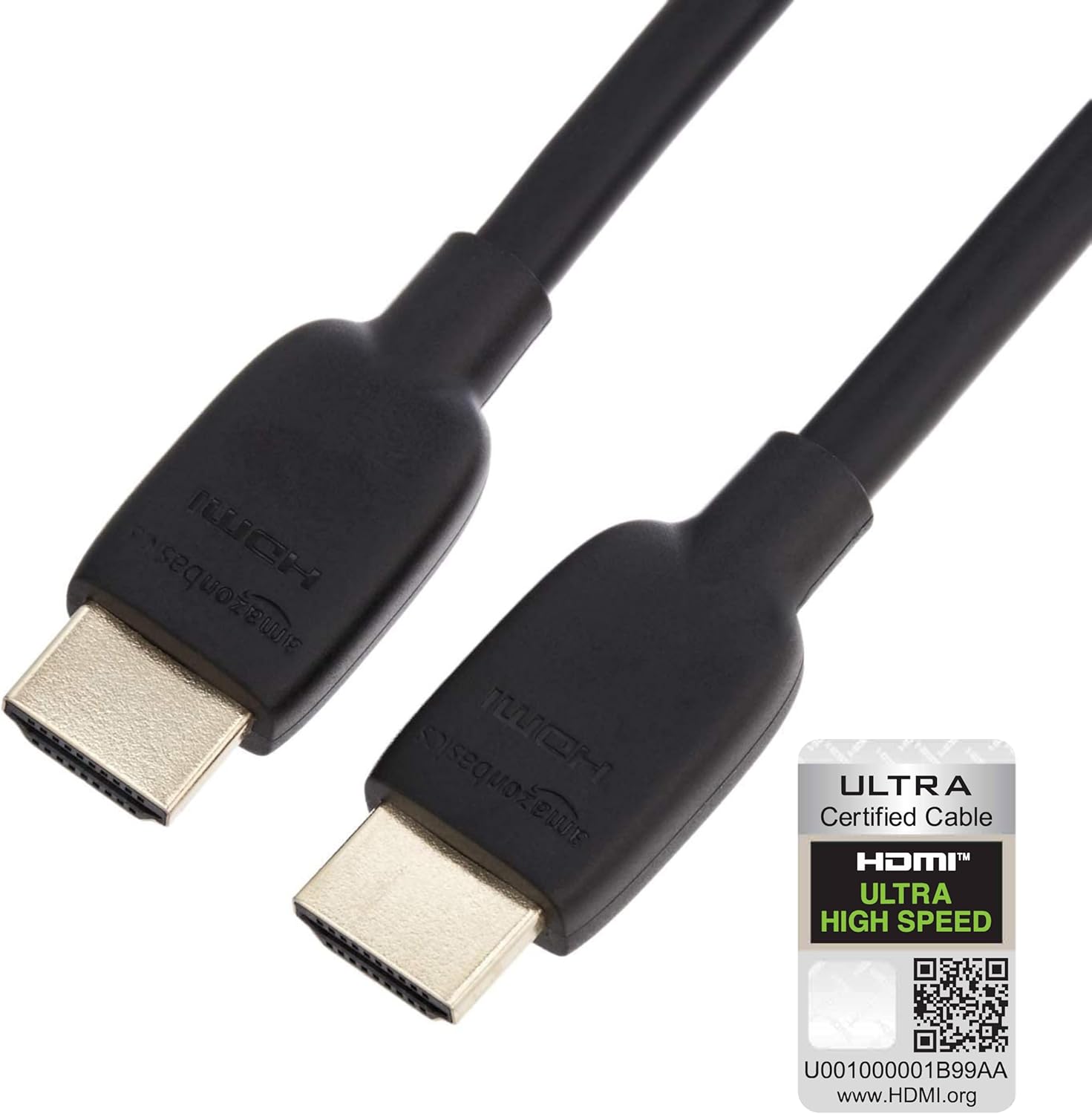
Cable and port matter as much as the logo. Adaptive-Sync rides DisplayPort. HDMI VRR needs an HDMI path that actually supports it (usually HDMI 2.1 Ultra High Speed for 4K120 consoles). A FreeSync sticker does nothing if VRR is off in the OSD, GPU control panel, or game.
When it matters
It matters whenever frame rates swing—competitive shooters, AAA titles that dip below the panel’s max Hz, or consoles pushing 4K120 with VRR on. Fixed refresh is fine for static desktop work and many movies; VRR shines when FPS is uneven. Skip the hunt if the display, GPU, and cable do not share a supported VRR path, or if you already cap FPS to a rock-steady value and never see tear.
For PC desk gaming, DisplayPort plus FreeSync / G-SYNC Compatible is the usual stack. For TV and console gaming, HDMI 2.1 VRR is the one to confirm on both ends. Related link standards: DisplayPort and What Is HDMI 2.1, and When Do You Need It?.
Related products
A budget FreeSync / Adaptive Sync panel, a DisplayPort 1.4 cable that carries Adaptive-Sync, and an Ultra High Speed HDMI cable for HDMI Forum VRR.
The KOORUI 24 Inch Gaming Monitor 144Hz FHD IPS (E2411K) is a compact FreeSync / Adaptive Sync panel for PC gaming when you want VRR without a premium monitor tax. View on Amazon for a simple 1080p 144 Hz starting point.
The Cable Matters DisplayPort 1.4 cable (6 ft) is the PC Adaptive-Sync run: locking DP plug, HBR3 bandwidth, and FreeSync / G-SYNC Compatible timing when GPU and panel support it. View on Amazon when the monitor’s VRR path is DisplayPort.
The Cable Matters Ultra High Speed HDMI cable (6.6 ft) is certified 48 Gbps HDMI 2.1 for console and TV HDMI VRR (plus 4K120-class modes on capable gear). View on Amazon when the VRR path is HDMI, not DP.
Read next
For the PC video plug that carries Adaptive-Sync, see DisplayPort. For the console and TV cable generation that includes HDMI Forum VRR, see What Is HDMI 2.1, and When Do You Need It?. For HDCP on the same HDMI path, see HDCP.