


Dynamic XLR microphones are the quiet-room workhorses of podcasting and streaming: they reject more room noise than condensers, need no phantom power, and plug into an XLR input on an interface or mixer. This shortlist stays under about $150 street and skips USB-only desk mics (for those, see Best USB Microphones for Calls and Streaming and the Shure MV6 review). If you still need a preamp and converters, start with Best Audio Interfaces for XLR Mics in 2026 before buying the mic.
What to Look For
XLR vs USB dual. Pure XLR (PodMic, SM58, AT2040) assumes you already have gain and monitoring on an interface. Dual XLR/USB (Q9U, Q2U) is insurance if you travel without a rack or want a laptop fallback.
Polar pattern. Cardioid is the podcast default. Hypercardioid (AT2040) rejects more side and rear noise when two hosts share a room or a PC fan sits nearby.
Gain hunger. Dynamics are quieter than condensers. Budget interfaces with weak preamps may need a Cloudlifter-style booster later; listings and buyer notes flag the PodMic and SM7B-class mics as gain-hungry. The SM58 and Q2U are usually easier on entry-level preamps.
Mount and accessories. Broadcast mics with swing mounts (PodMic, Q9U) hang cleanly on a boom. Handhelds (SM58, Q2U) need a clip. Budget for a boom and XLR cable if the box does not include them.
Not on this list. The Rode PodMic USB and Shure MV6 are USB-first and sit outside this XLR shortlist. SM7B-class broadcast mics usually clear the $150 cap.
Best Overall: Rode PodMic
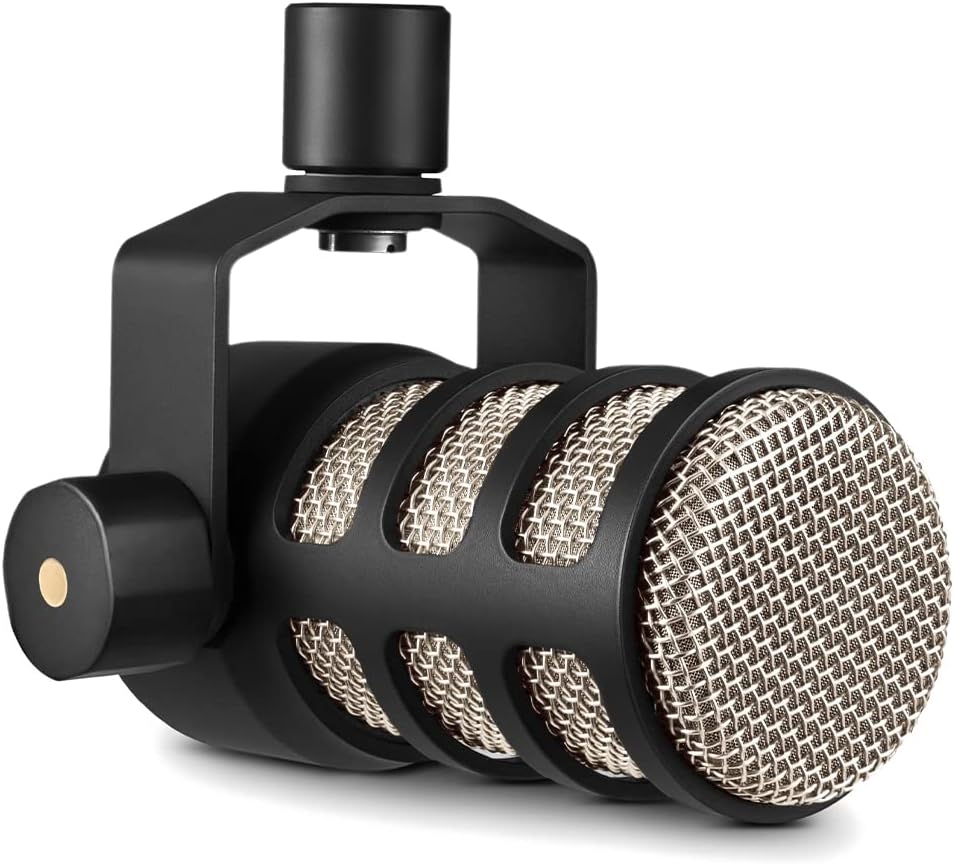
The Rode PodMic is the default under-$100 broadcast dynamic for speech: cardioid capsule, internal pop filter and shock mounting, all-metal body, and an integrated swing mount that bolts to a boom. Street price around $86 keeps the whole XLR path affordable once the interface is sorted. Listing copy and thousands of ratings (about 4.8) consistently position it for podcasting and RØDECaster workflows rather than live vocals.
✓ Pros
- ✓ Purpose-built for speech with built-in pop filter and shock mount
- ✓ Integrated swing mount for boom arms
- ✓ Strong ratings and street price well under $100
✕ Cons
- ✕ XLR only (buy PodMic USB if you need plug-and-play)
- ✕ Can need healthy interface gain in quiet whisper takes
- ✕ No included XLR cable
Who it is for: solo podcasters and streamers building a proper XLR desk. Who should skip it: buyers who refuse to own an interface yet (take the Q2U or Q9U dual path), or hosts who need hypercardioid rejection (AT2040).
Best Classic: Shure SM58
The Shure SM58 is the handheld vocal standard: cardioid dynamic, built-in spherical pop filter, pneumatic shock mount, and a reputation for surviving tours. At about $109 it is not the most broadcast-shaped body on a boom, but it is the safest long-term XLR mic if the same capsule may also do live vocals, interviews, or a second room. Ratings near 4.8 across a huge review sample back that durability story.
✓ Pros
- ✓ Industry-standard vocal tuning and build
- ✓ Works for podcast speech and live stages
- ✓ Huge support ecosystem (clips, windscreens, replacements)
✕ Cons
- ✕ Handheld form needs a clip and looks less "broadcast" on camera
- ✕ Less bass proximity effect than dedicated podcast dynamics
- ✕ Bundle SKUs with stands/cables can push past $150
Best for creators who want one mic that survives desks and stages. Skip if you want an integrated broadcast yoke and maximum desk aesthetic (PodMic or Q9U).
Best Isolation: Audio-Technica AT2040
The Audio-Technica AT2040 aims at noisy apartments: hypercardioid pattern, large-diaphragm dynamic capsule, multistage internal windscreen, and an integrated shock mount, with street pricing around $109. Reviewers and Audio-Technica's own positioning emphasize side/rear rejection for two-person rooms and PC fan hum. It stays XLR-only, so plan the interface first.
✓ Pros
- ✓ Hypercardioid focus for untreated rooms
- ✓ Internal pop filtering and integrated shock mount
- ✓ Includes pivoting stand mount and pouch
✕ Cons
- ✕ XLR only (USB sibling is a different, pricier SKU)
- ✕ Tighter pattern needs more consistent mic technique
- ✕ Fewer long-term "industry standard" credentials than the SM58
Buy this when room noise is the bottleneck. Spend elsewhere if you mostly record alone in a quiet booth and want the PodMic's boom-native mount.
Best Dual XLR/USB: Samson Q9U
The Samson Q9U sits at the top of the budget (about $150) with both XLR and USB-C (24-bit/96 kHz), cardioid dynamic capsule, onboard mute, and zero-latency headphone monitoring on USB. It is the bridge mic when the desk has an interface today but a laptop-only travel day tomorrow. Ratings are solid (about 4.2) rather than legendary, so treat it as a flexible tool rather than a forever heirloom.
✓ Pros
- ✓ True XLR plus USB-C without a separate interface on travel days
- ✓ Broadcast-style mount and dual-layer windscreen
- ✓ Mute and headphone monitoring on the USB path
✕ Cons
- ✕ Street price rides the $150 ceiling
- ✕ Ratings trail the PodMic and SM58
- ✕ Heavier feature set than a pure XLR minimalist needs
Best for hybrid creators who refuse to choose between interface and laptop. Skip if you already standardized on XLR and want to keep cash for a better boom or interface (PodMic).
Best Budget Pack: Samson Q2U
The Samson Q2U remains the value pack: USB-C and XLR, desktop tripod, mic clip, windscreen, and cables for about $80. It is less of a broadcast showpiece than the PodMic, but it is the cheapest honest way onto both a laptop and an interface without buying mounts separately. High review volume (about 4.5 to 4.6) makes it a low-risk starter.
✓ Pros
- ✓ Dual USB/XLR with stand and cables included
- ✓ Easy gain on budget interfaces and laptops
- ✓ Strong ratings for the price
✕ Cons
- ✕ Handheld look is less "studio" on camera than PodMic or Q9U
- ✕ Capsule tuning is more general-purpose than broadcast-specific
- ✕ Desktop tripod is short; most desks still want a boom later
Buy this for a first XLR path under $100 all-in for mic accessories. Upgrade later to the PodMic or AT2040 when the interface and boom are already on the desk.
Comparison
| Model | Pattern | Outputs | Mount vibe | Street |
|---|---|---|---|---|
| Rode PodMic | Cardioid | XLR | Broadcast swing mount | ~$86 |
| Shure SM58 | Cardioid | XLR | Handheld + clip | ~$109 |
| Audio-Technica AT2040 | Hypercardioid | XLR | Podcast with shock mount | ~$109 |
| Samson Q9U | Cardioid | XLR + USB-C | Broadcast dual | ~$150 |
| Samson Q2U | Cardioid | XLR + USB-C | Handheld pack | ~$80 |
The Bottom Line
Start with the Rode PodMic when the goal is a dedicated XLR podcast mic under $100 on a boom. Choose the Shure SM58 for a classic that also leaves the desk, the Audio-Technica AT2040 when isolation beats aesthetics, the Samson Q9U for dual XLR/USB at the budget ceiling, or the Samson Q2U when the box must include a stand and cables. Finish the path with an audio interface, a boom arm, and skip USB-only roundups unless you are not ready for XLR yet.

