

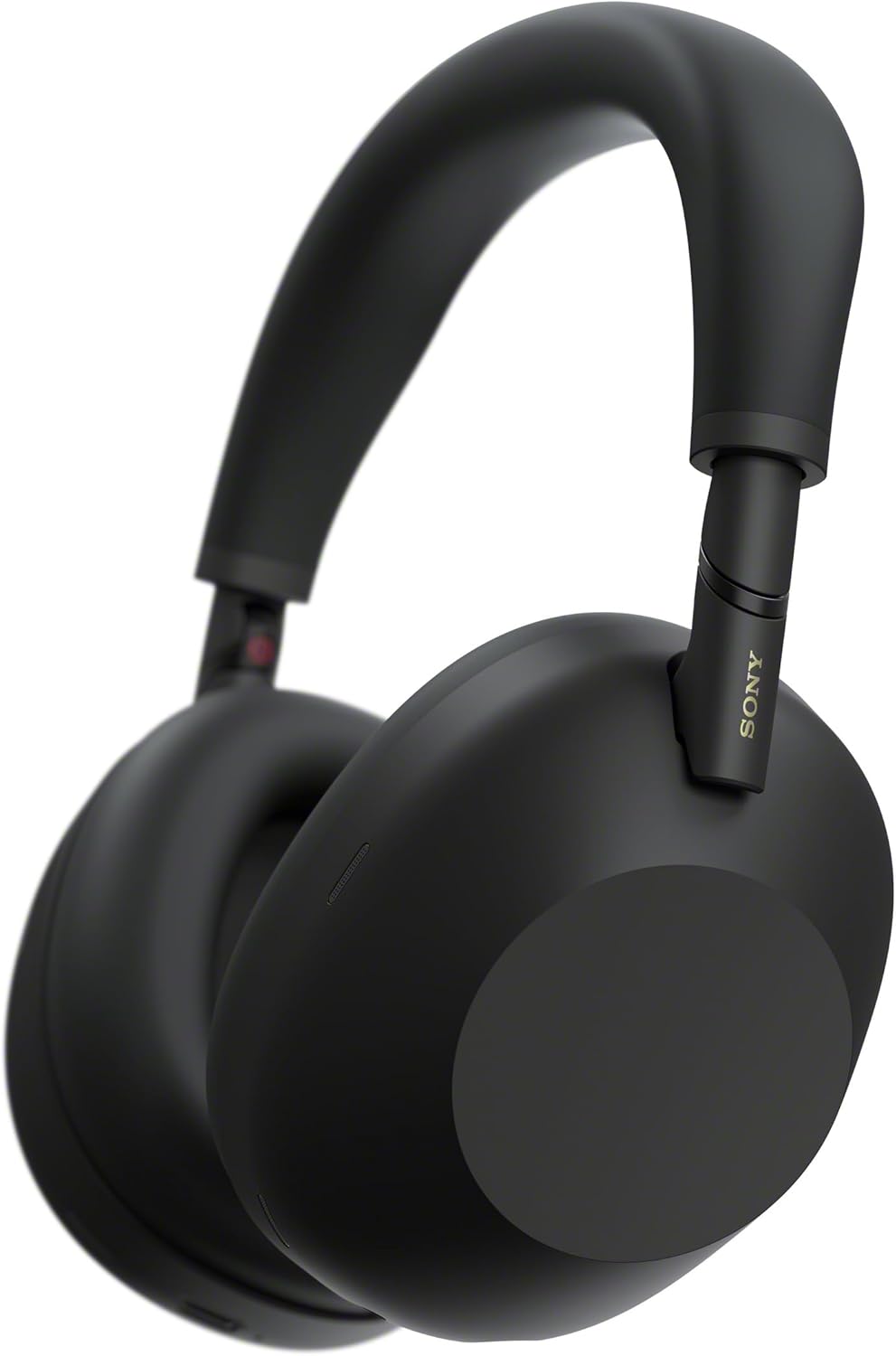
One pair of flagship noise-canceling headphones for focus work, video calls, and long flights usually comes down to two names in 2026: the Sony WH-1000XM6 and the Bose QuietComfort Ultra Headphones (2nd Gen). Both cost about $450, both fold into a carry case, both promise up to 30 hours with noise canceling on, and both connect to two devices at once. They split on where their noise canceling is strongest, how they handle calls and wind, which high-quality Bluetooth codec they speak, and whether the USB-C port can carry audio. Everything below comes from Sony and Bose spec pages and manuals, current Amazon US listings, and published lab results from RTINGS and SoundGuys, summarized in our own words.
| Attribute | Sony WH-1000XM6 Wireless Noise Canceling Headphones (Black) | Bose QuietComfort Ultra Headphones (2nd Gen) (Black) |
|---|---|---|
| Rating | 4.2 | 4.2 |
| Price | $200-$500 | $200-$500 |
| Weight | About 254 g | 0.58 lb (about 264 g) |
| Battery | Up to 30 h ANC on, 40 h ANC off | Up to 30 h ANC on, 45 h ANC off |
| Quick charge | 3 min for up to 3 h (USB PD) | 15 min for up to 2.5 h |
| Codecs | SBC, AAC, LDAC, LC3 | SBC, AAC, aptX Adaptive |
| Bluetooth | 5.3, multipoint | 5.4, multipoint |
| USB-C audio | No | Yes, 16-bit 44.1/48 kHz lossless |
| Microphones | 12 total | Not listed |
| Buy | Check price on Amazon | Check price on Amazon |
Quick verdict
Buy the Sony WH-1000XM6 if most of your listening happens in an open office, a café, or a coworking space where voices and keyboard clatter are the problem, if you take a lot of calls from noisy places, or if you use an Android phone with LDAC and want the most detailed wireless sound.
Buy the Bose QuietComfort Ultra (2nd Gen) if you want to plug into a laptop over USB-C for wired, lossless audio and calls, if you own a Snapdragon Sound phone, if you walk or commute outdoors in wind, or if long-session cushioning matters more than the last bit of noise reduction.
Which models this page compares
We compare the Sony WH-1000XM6 in Black (model WH1000XM6B.UC) with the Bose QuietComfort Ultra Headphones (2nd Gen) in Black (model 890101-0100). Make sure the Bose listing says 2nd Gen: the 2023 original QuietComfort Ultra looks almost identical but lacks USB-C audio and charging while listening.
Specs side by side
| Spec | Sony WH-1000XM6 | Bose QC Ultra (2nd Gen) |
|---|---|---|
| Weight | About 254 g (9 oz) | 0.58 lb (about 264 g) on Bose's US spec sheet |
| Fold and case | Folds, compact case with magnetic closure | Folds, zip carry case |
| Battery, noise canceling on | Up to 30 hours (26 with LDAC) | Up to 30 hours (23 with Immersive Audio) |
| Battery, noise canceling off | Up to 40 hours | Up to 45 hours |
| Quick charge | 3 min for up to 3 hours (USB PD adapter) | 15 min for up to 2.5 hours |
| Full charge | About 3.5 hours | Up to 3 hours |
| Codecs | SBC, AAC, LDAC, LC3 (LE Audio) | SBC, AAC, aptX Adaptive (Snapdragon Sound) |
| Bluetooth | 5.3, multipoint | 5.4, multipoint |
| USB-C audio | No, charging only | Yes, 16-bit 44.1/48 kHz lossless plus USB mic |
| Listen while charging | Yes | Yes |
| Analog cable | 3.5 mm, works when powered off | 2.5 mm to 3.5 mm cable included |
| Microphones | 12 total, 6 used for calls | Not listed by count on the US spec page |
| Spatial audio | 360 Reality Audio Upmix for Cinema | Immersive Audio and Cinema Mode |
| Controls | Touch panel plus buttons | Buttons plus touch volume strip |
| Amazon US price | $458 | $449 |
Noise canceling
Winner: Sony WH-1000XM6, narrowly.
Both are at the top of the category, and on a plane the difference is small. RTINGS measured both on the same test head and calls the Sony's full-range isolation slightly better, with the biggest gains over the older XM5 in the high bass and midrange. That band is where office chatter, open-plan phone calls, and HVAC whine live, so the Sony is the better fit for a buyer who mainly wants to concentrate at a desk. Sony credits its QN3 processor and 12 microphones, and an Adaptive NC Optimizer that adjusts for air pressure, glasses, and hats.
The Bose fights back outdoors. Its Wind Block feature reduces gust noise, and RTINGS found it works better than on the first QC Ultra. RTINGS also notes the Sony has no dedicated wind reduction and can pop in turbulence. SoundGuys, testing both, found no meaningful real-world gap on airplane, train, and truck noise. If your commute is a windy walk, lean Bose; if your noise is people talking, lean Sony.
Call mic quality
Winner: Sony in noisy rooms, Bose for natural voice in quiet ones.
Sony dedicates six of its microphones to an AI beamforming voice system, and it supports tap to mute. RTINGS rates its mic performance very good: voices sound full and background noise is separated well, though a train pulling in still overwhelms it. RTINGS rates the Bose mic as decent, with natural speech but background noise lowered rather than removed.
Listeners do not always agree with the lab. In SoundGuys' public poll of recorded samples, 51 percent preferred the Bose and 26 percent the Sony. The fair reading: in a quiet home office, both sound good and the Bose may sound more natural; from an airport gate or a busy kitchen, the Sony keeps you more intelligible. The Bose has one extra trick for desk calls: over USB-C it works as a wired USB headset, mic included, which avoids Bluetooth's low-quality hands-free profile on a laptop. If you mostly take calls at a desk, our guide to USB headphone DACs for desk calls covers wired setups that pair well with either.
Comfort, weight, fold, and case
Winner: tie, with different strengths.
On paper the Sony is the lighter pair at about 254 g, versus the 0.58 lb (roughly 264 g) Bose lists in its US specifications. Sony brought back a folding hinge on the XM6 after the non-folding XM5, and the case is smaller with a magnetic closure, which matters in a crowded backpack. A wider, asymmetrical headband is meant to spread pressure better than the XM5's.
Bose leans on plush cushions and a metal headband that spreads clamping force, and many published reviews still treat its fit as the comfort benchmark for long sessions. Its earcups swivel and fold into a zip case that is a bit bulkier. Both have replaceable ear cushions.
Sound and codecs
Winner: Sony for Android with LDAC, Bose for Snapdragon Sound phones, close on iPhone.
The Sony supports LDAC at up to 990 kbps and LC3 over LE Audio, while the Bose supports aptX Adaptive with Snapdragon Sound certified phones, which can adapt to lossless or low-latency modes. iPhones use AAC for both, so neither codec advantage applies to Apple users. Many Pixel and Samsung phones support LDAC but not aptX Adaptive; many phones with Snapdragon chips from other brands support aptX Adaptive, so look up your phone's codec list before deciding.
On tuning, SoundGuys expects more people to prefer the Sony's sound out of the box, which Sony developed with mastering engineers. Bose counters with CustomTune, which adapts sound to your ear, and Immersive Audio, which places stereo music in front of you, plus a Cinema Mode for video. Sony's answer for video is 360 Reality Audio Upmix for Cinema. Both apps offer an adjustable EQ.
Multipoint and app features
Winner: tie.
Both stay connected to two devices at once, such as a phone and a laptop, and both support Google Fast Pair on Android. Sony's Sound Connect app adds Speak-to-Chat, which pauses music when you talk, and an Auto Ambient Sound mode. Bose's app offers Quiet, Aware, and Immersion modes plus custom modes and a shortcut button.
USB-C wired audio and playing while charging
Winner: Bose QuietComfort Ultra (2nd Gen), clearly.
This is the Bose's biggest practical advantage. Over a single USB-C cable to a laptop, phone, or tablet, it plays digital lossless audio at 16-bit, 44.1 or 48 kHz, works as a wired headset for calls, and charges at the same time. The Sony's USB-C port only charges. You can keep listening over Bluetooth while it charges, or use the included 3.5 mm cable, which also works with the headphones switched off. For a laptop without a headphone jack, the Bose is the simpler wired setup.
Battery and quick charge
Winner: Sony for quick top-ups, Bose for longest runtime with noise canceling off.
Both rate up to 30 hours with noise canceling on, but each has a caveat: the Sony drops to 26 hours over LDAC, and the Bose drops to 23 hours with Immersive Audio on. With noise canceling off, Bose rates 45 hours against Sony's 40. Sony's quick charge is the standout: 3 minutes on a USB PD charger (9 V at 2.3 A or more) adds up to 3 hours, or about 1 hour on a basic 5 V charger. Bose rates 15 minutes for up to 2.5 hours. Neither includes a wall charger; our USB-C charger guide lists PD bricks that work, and a power bank like the one in our Anker Prime 27K review covers long travel days.
Price and value
Winner: Bose by a small margin.
Amazon US currently lists the Sony at $458 and the Bose at $449. Sony's own store lists the XM6 at $459.99, up from its $449.99 launch price in May 2025. At a $9 gap, price should not decide this; features should. The Bose includes more connection options for the money, while the Sony delivers the better measured noise reduction and mics.
Who should skip both
- Anyone with a budget under $100: these are $450 headphones. If you want something light for the gym or commute, our wireless earbuds under $50 roundup covers a very different class and budget.
- Desk-only listeners who never travel: a pair of good speakers may serve you better; see the best desk speakers.
- Runners and gym users: neither pair is rated for water resistance on its Amazon listing.
Which one to buy
✓ Pros
- ✓ Slightly stronger measured noise isolation, especially voices
- ✓ Call mics handle noisy rooms better in lab tests
- ✓ LDAC and LE Audio support
- ✓ 3 minute charge for up to 3 hours
✕ Cons
- ✕ No USB-C audio, charging only
- ✕ No dedicated wind reduction
- ✕ LDAC cuts battery to 26 hours
✓ Pros
- ✓ Lossless USB-C audio and USB-C call mic
- ✓ aptX Adaptive with Snapdragon Sound phones
- ✓ Wind Block for outdoor use
- ✓ 45 hours with noise canceling off
✕ Cons
- ✕ Mics leave more background noise in loud places
- ✕ Immersive Audio cuts battery to 23 hours
- ✕ Slightly heavier and bulkier case
For more travel gear, see our travel tech kit at three budgets, or browse more head-to-heads in our comparisons section.
Bottom line
The Sony WH-1000XM6 is the better single pair for focus work and calls: it blocks voices and office noise a little better, keeps you clearer on calls from noisy places, folds into a smaller case, and recovers hours of battery in minutes. The Bose QuietComfort Ultra Headphones (2nd Gen) is the pick if you want wired USB-C audio and calls from a laptop, use a Snapdragon Sound phone, or spend a lot of time outside in the wind. View on Amazon to compare current colors and prices before you order.